Hatta is a mountain town and exclave of the Emirate of Dubai, located in the Hajar Mountains near the UAE's border with Oman.
Its landscape feels very different from central Dubai.
Instead of high-rise districts and a flat urban coastline, Hatta is surrounded by rocky mountains, wadis, farms and small settlements. Water flowing through the mountain environment has influenced where people lived and how agriculture developed, while forts, watchtowers and traditional houses preserve evidence of the area's long history.
Hatta has also become one of Dubai's best-known mountain destinations, but tourism represents only the newest chapter in its story.
People lived here long before modern roads, reservoirs and adventure attractions appeared. Farming, water management, livestock and movement through mountain routes shaped everyday life for generations.
Today, Hatta combines this older mountain heritage with environmental conservation, tourism and long-term development under Dubai's wider urban planning strategy.
| Fact | Details |
|---|---|
| Place | Hatta |
| Country | United Arab Emirates |
| Emirate | Dubai |
| Region | Hajar Mountains |
| Location type | Mountain town and exclave |
| Approximate distance from central Dubai | Around 130 km by road, depending on route |
| Official language | Arabic |
| Currency | UAE Dirham (AED) |
| Time zone | UTC +4 |
| Climate | Hot, arid mountain climate |
| Known for | Mountains, wadis, heritage, farming and Hatta Dam |
Hatta is a town and mountainous territory belonging to the Emirate of Dubai.
It is geographically separated from Dubai's main metropolitan area, which makes it an exclave.
This distinction is important.
Hatta is not another emirate, and it should not be confused with a neighbourhood inside Dubai City.
Administratively, it belongs to Dubai, but geographically and visually it has a very different identity from the emirate's main urban area.
The surrounding Hajar Mountains have shaped Hatta's settlement patterns, agriculture, traditional architecture and modern tourism.
This relationship between Hatta and Dubai explains why the phrase Hatta Dubai is commonly used even though the two places are separated by a considerable road journey.
Hatta lies southeast of Dubai's main urban area in the Hajar Mountains, close to the UAE-Oman border.
The journey from central Dubai is roughly 130 kilometres by road, although the exact distance and travel time depend on the starting point and route.
Hatta's position gives it a landscape unlike most of metropolitan Dubai.
Rocky mountain ridges surround valleys and settlements.
Wadis carry seasonal water through lower terrain.
Small agricultural areas appear where soil and water conditions make cultivation possible.
The proximity of Oman also reflects Hatta's place within a wider mountain region where modern political boundaries cross landscapes that communities have moved through for generations.
The Hajar Mountains are central to Hatta's identity.
They form part of the mountain system extending through northeastern UAE and northern Oman.
Unlike sand dunes, these mountains consist largely of exposed rock, steep slopes and narrow valleys.
Their geology creates a rugged environment in which settlement has historically depended on access to water and suitable land.
The mountains also influence local weather.
Rain falling at higher elevations can move rapidly through valleys and wadis.
This runoff historically provided an important source of water for communities and farms.
Modern roads have made mountain travel considerably easier, but the terrain still explains why Hatta developed differently from the flatter coastal areas of Dubai.
Water has always been one of the most important factors in Hatta's development.
Rainfall in the region is limited and irregular, but the mountain terrain can collect and channel water into wadis and groundwater systems.
Traditional communities learned to use these resources carefully.
Water could support drinking needs, livestock, date palms and small farms.
Traditional irrigation methods helped distribute available water to cultivated land.
This relationship between mountains, rainfall and farming is essential to understanding Hatta.
The settlement did not develop simply because of its scenic location.
It developed where people found ways to live within a demanding mountain environment and manage limited natural resources.
Agriculture has long been part of Hatta's local economy and culture.
Farms developed in locations where groundwater, runoff and suitable soil made cultivation possible.
Date palms were particularly valuable.
They provided food and shade while different parts of the palm could also be used for practical purposes.
Other crops could be grown where water supplies allowed.
Livestock also formed part of traditional rural life.
These farming practices connected families closely with seasonal conditions and water availability.
Agriculture remains part of Hatta today, although modern irrigation and farming techniques have changed how land is managed.
Current development planning also recognises farming as part of Hatta's local economy and cultural landscape rather than treating it only as something from the past.
Hatta has a history extending back thousands of years.
Its location within the Hajar Mountains provided access to water, agricultural land and routes through the surrounding terrain.
Communities adapted to the environment by building settlements near resources and developing systems for farming and water management.
The area's historical importance did not come from large-scale urban development.
Instead, Hatta developed as a mountain community where agriculture, livestock, family networks and movement between settlements were central to everyday life.
Traditional buildings and archaeological evidence help preserve parts of this history.
Modern Hatta has changed considerably, but its settlement pattern still reflects the influence of mountains and water.
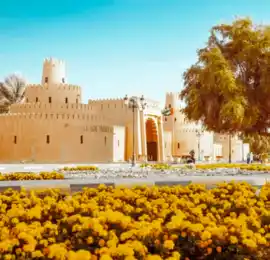
Hatta Heritage Village is one of the clearest places to understand traditional life in the area.
The restored settlement contains houses and other structures designed to show how communities lived before modern development transformed the region.
Traditional buildings used materials suited to the local environment.
Stone, mud, palm materials and other locally available resources could be incorporated into construction.
The layout of homes also reflected practical needs such as shade, ventilation, privacy and family life.
Displays associated with farming, household activities and traditional crafts provide additional context.
The value of the Heritage Village is not simply that the buildings look old.
It helps explain how mountain geography influenced architecture, work and community life.
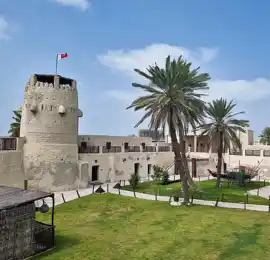
Historic forts and watchtowers form another important part of Hatta's landscape.
These structures were built in strategic positions where communities could observe surrounding routes and protect settlements.
Mountain geography made visibility especially important.
Elevated towers could provide views across valleys, farms and approaches to inhabited areas.
Fortified structures also reflected a period when communities needed to protect water sources, agricultural resources and routes between settlements.
Today, restored towers and forts are reminders that Hatta's mountains were not simply a scenic backdrop.
They influenced security, movement and the physical organisation of settlements.
Hatta's older architecture developed in response to both climate and available materials.
Thick walls helped moderate indoor temperatures.
Courtyards provided private outdoor spaces.
Openings and room layouts could improve airflow.
Construction materials were often sourced locally because transporting heavy building materials through mountain terrain was difficult.
The result was architecture closely connected with its environment.
Modern buildings use very different construction methods, but preserved heritage structures allow visitors to see how earlier residents solved practical problems using local knowledge.
Hatta's traditional culture developed around family, agriculture, livestock, water and the surrounding mountains.
Community relationships were especially important in environments where resources could be limited.
Hospitality remains part of wider Emirati culture.
Arabic coffee and dates are traditionally associated with welcoming guests, while family gatherings continue to play an important social role.
Local culture also reflects knowledge of the landscape.
Understanding water sources, farming conditions, mountain routes and seasonal weather was once essential to everyday survival.
Modern infrastructure has reduced dependence on much of this traditional knowledge, but heritage preservation keeps these relationships visible.
Hatta Dam is one of the most recognisable modern landmarks in the area.
The reservoir sits between steep mountain slopes, creating a striking contrast between blue-green water and exposed rock.
Beyond its visual appeal, the dam reflects the continuing importance of water management in an arid mountain environment.
Reservoir infrastructure helps collect and manage water rather than allowing all seasonal runoff to pass immediately through the landscape.
The dam has also become a major recreational area.
Water-based activities are available around the reservoir, but detailed information about kayaking and individual experiences belongs more naturally in dedicated activity guides.
For a general Hatta guide, the dam is most useful as an example of how water, infrastructure and modern tourism now meet within the same mountain landscape.
Hatta's natural environment differs considerably from the sandy desert image often associated with Dubai.
Rocky mountains dominate the landscape.
Wadis cut through valleys.
Vegetation appears where water and soil conditions allow plants to survive.
Wildlife in mountain environments must also adapt to heat, limited water and rugged terrain.
The ecological value of Hatta comes partly from this combination of mountain habitats and seasonal water systems.
As visitor numbers and development increase, protecting these environments becomes increasingly important.
Modern planning for Hatta therefore includes conservation alongside tourism and economic development.
Hatta has changed rapidly in recent decades.
Improved roads have made the area much easier to reach from Dubai.
Tourism infrastructure has expanded.
Outdoor recreation, accommodation and visitor facilities have created new economic opportunities.
At the same time, Dubai's development strategy has increasingly treated Hatta as more than a weekend destination.
The objective is to combine economic growth with environmental protection, heritage conservation and improved services for residents.
This matters because uncontrolled development could easily damage the mountain landscape and historic character that make Hatta distinctive in the first place.
Hatta forms part of Dubai's wider long-term development planning.
The Hatta Master Development Plan, within the broader Dubai 2040 Urban Master Plan framework, focuses on improving quality of life while protecting the area's natural and cultural character.
Development priorities include tourism, sustainable transport, agriculture, entrepreneurship, public facilities and environmental conservation.
Heritage preservation is also important.
Rather than replacing Hatta's traditional identity with a completely new tourism district, planning aims to connect future development with the existing mountain environment and community.
This approach reflects a broader challenge facing Hatta: creating economic opportunities without losing the landscapes and heritage that distinguish it from metropolitan Dubai.
Hatta's economy historically depended heavily on agriculture, livestock and local trade.
Those activities remain part of its identity, but the economic base is becoming more diverse.
Tourism now supports accommodation, restaurants, outdoor activities, retail and other services.
Agriculture continues to receive attention through programmes intended to support local farms and products.
Small businesses and entrepreneurship are also part of current development plans.
The relationship between these sectors is important.
Tourism creates demand for local products and services, while agriculture and heritage help give Hatta an identity that cannot easily be reproduced elsewhere.
Modern visitors often discover Hatta through outdoor activities.
The mountains support hiking and mountain biking, while Hatta Dam provides opportunities for water-based recreation.
Adventure facilities have expanded around the area.
These experiences are an important part of modern Hatta, but they should not define the entire destination.
A visitor who only sees the activity centres misses the older story of farming, water management, architecture and mountain settlement.
Understanding both sides provides a more complete picture.
Hatta is simultaneously a historic community and a modern outdoor destination.
Hatta has a hot, arid climate, but its mountain location creates some differences from coastal Dubai.
Summers remain very hot.
Outdoor activity during the hottest part of the day can be uncomfortable and potentially unsafe.
Winters are milder and generally more suitable for exploring mountain areas.
Higher terrain can also feel cooler than central Dubai, particularly during the colder months.
Rainfall is limited and irregular.
However, mountain rain requires particular caution because water can move quickly through wadis.
Visitors should avoid entering flood-prone valleys when unstable weather or heavy rainfall is expected.
Hatta is connected to Dubai and the northern Emirates by road.
Driving is one of the most flexible ways to reach the area because attractions and settlements are spread across the mountain landscape.
Public transport options also connect Dubai with Hatta.
Journey times vary according to starting point, traffic and route.
Visitors driving near the Oman border should also pay attention to navigation.
Some routes and roads may approach international border areas, so it is sensible to follow current UAE road directions rather than relying on assumptions based only on straight-line distance.
Once in Hatta, having access to transport makes it easier to move between heritage areas, farms, mountain locations and the dam.
Hatta is best understood as more than a collection of outdoor attractions.
The Hajar Mountains explain its rugged geography.
Wadis and groundwater explain where settlement and agriculture became possible.
Traditional farms reveal how communities used limited natural resources.
Heritage buildings show how architecture adapted to climate and locally available materials.
Forts and watchtowers reflect the importance of protecting settlements and routes.
Hatta Dam represents modern water infrastructure.
And current development plans show how Dubai is trying to combine tourism, conservation and local economic growth.
Seeing these elements together provides a much deeper understanding of Hatta than simply moving between individual attractions.
Hatta has become one of Dubai's most recognisable outdoor destinations, but adventure tourism is only one part of its identity.
For generations, life here depended on mountains, water, farming and close community relationships.
Traditional buildings demonstrate how residents adapted to climate and available materials.
Forts and watchtowers reflect the strategic importance of mountain routes and settlements.
Agriculture shows how carefully water had to be managed.
Modern roads, Hatta Dam and tourism infrastructure have transformed the area, while the Hatta Master Development Plan is shaping its next stage of growth.
Together, mountains, wadis, farming, heritage, water management and modern development explain why Hatta holds a distinctive place within the Emirate of Dubai and the wider UAE.