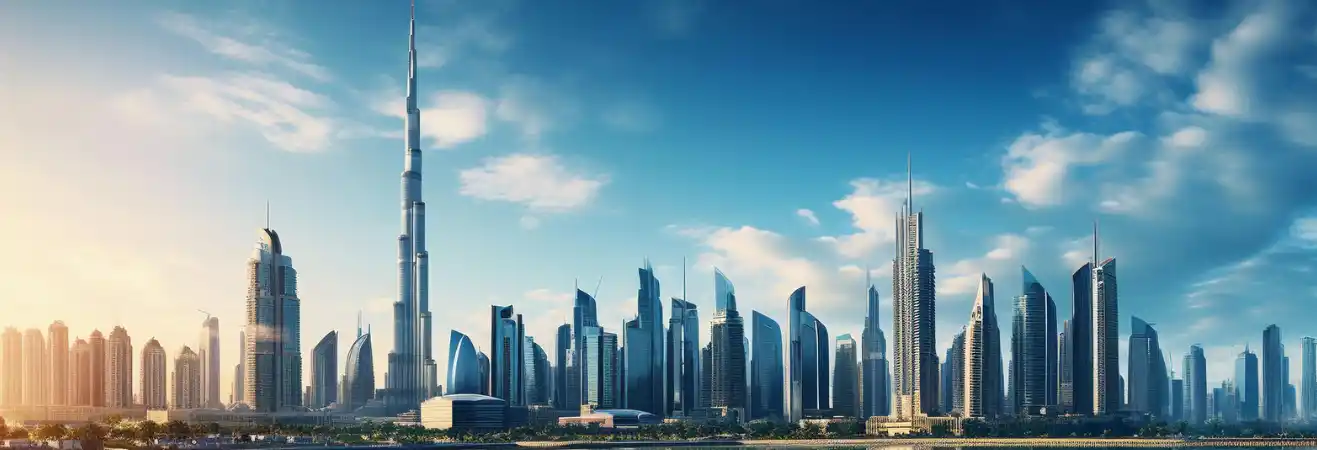
Dubai is both a city and one of the seven emirates that make up the United Arab Emirates. Known around the world for its skyline, ambitious architecture and international lifestyle, Dubai is also a place shaped by desert landscapes, coastal trade and communities that existed long before its modern towers appeared.
The city of Dubai sits on the Arabian Gulf and serves as the main urban centre of the Emirate of Dubai. Dubai Creek divides the historic areas of Deira and Bur Dubai, while newer districts stretch along the coast and further inland.
For visitors, understanding Dubai as more than just a modern city makes it a much more interesting place to explore.
| Fact | Details |
|---|---|
| Emirate | Dubai |
| Country | United Arab Emirates |
| Main city | Dubai |
| Official language | Arabic |
| Currency | UAE Dirham (AED) |
| Time zone | UTC +4 |
| Climate | Desert climate |
| Coastline | Arabian Gulf |
| Historic centre | Dubai Creek area |
English is also widely used across hotels, restaurants, shops, tourism and everyday business.
Dubai is both a city and an emirate.
The Emirate of Dubai is one of the seven emirates of the United Arab Emirates. Dubai city is the emirate's principal urban centre and the place most people mean when they simply say “Dubai.”
This distinction matters because Dubai extends well beyond Downtown Dubai, Dubai Marina and the city's other familiar districts.
The emirate also includes desert areas and Hatta, a mountainous enclave close to Oman.
So while much of what visitors associate with Dubai is concentrated in the city, the wider emirate includes very different landscapes and communities.
Dubai is located on the Arabian Gulf coast of the United Arab Emirates. It shares borders with Abu Dhabi to the south, Sharjah to the northeast, and Oman to the southeast. Its location has helped Dubai develop as an important centre for regional trade and international connections. Its coastal location helped Dubai develop as a trading centre long before aviation, tourism and modern real estate became major parts of its economy.
The emirate's landscape changes considerably as you move away from the coast.
The densely developed city gradually gives way to more open areas and eventually desert terrain. Hatta provides another contrast, with rocky mountain scenery and wadis that look very different from both central Dubai and the surrounding sand desert.
That geographical variety is easy to overlook if a trip never goes beyond the main city districts.
Modern Dubai developed remarkably quickly, but its story did not begin with skyscrapers.
For generations, Dubai Creek played a central role in local life.
Its sheltered waters supported trade and helped communities grow around what are now Deira and Bur Dubai. Merchants, boats, markets and trading connections across the Gulf and beyond contributed to Dubai's development as a commercial centre.
Fishing and pearling were also important parts of the local economy before the transformation brought by oil revenues and later economic diversification.
Visitors can still see traces of this earlier Dubai around the Creek.
Traditional abras continue to cross the water, while souks and older neighbourhoods provide a very different atmosphere from Downtown Dubai or Dubai Marina.
The contrast is useful because it shows that today's city was built on an older trading culture rather than appearing from nowhere.
The discovery and export of oil accelerated Dubai's development, but oil alone does not explain the city that exists today.
Dubai invested heavily in infrastructure, ports, aviation and trade while developing sectors including tourism, finance, logistics, real estate, retail and hospitality.
That diversification helped turn the emirate into an international business and transport hub.
Dubai International Airport connects the city with destinations around the world, while major ports support its long-standing role in regional and global trade.
The result is a city where large-scale development sits alongside neighbourhoods that still reflect Dubai's earlier history.
Dubai is one of the seven emirates of the United Arab Emirates.
In 1971, Dubai joined Abu Dhabi, Sharjah, Ajman, Umm Al Quwain and Fujairah in forming the UAE. Ras Al Khaimah joined the federation in 1972.
Dubai retains its own ruler and local government while also forming part of the UAE's federal system.
This arrangement helps explain why Dubai has its own government departments, regulations and development policies while still sharing national institutions, currency, foreign policy and other federal structures with the rest of the Emirates.
For visitors, Dubai and the UAE are therefore not interchangeable terms.
Dubai is one emirate within the country.
One of Dubai's most interesting characteristics is the contrast between different parts of the city.
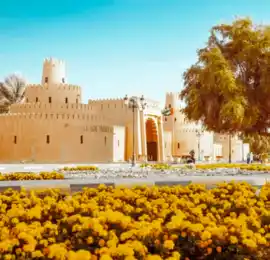
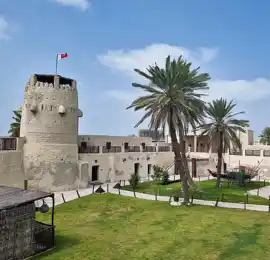
Around Dubai Creek, areas such as Deira and Bur Dubai retain strong connections to the city's commercial past. Souks, traditional boats, older streets and historic buildings create a noticeably different environment from the newer districts.
Move towards Downtown Dubai and the landscape changes dramatically.
High-rise development, hotels, shopping centres and landmarks such as the Burj Khalifa represent the Dubai that became internationally famous during the city's rapid expansion.
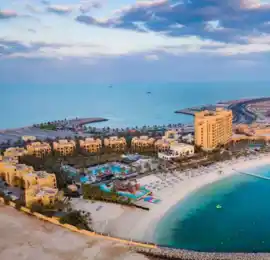
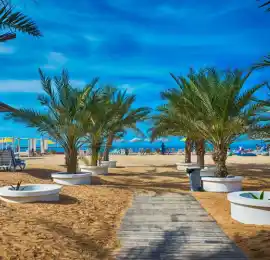
Further along the coast, areas such as Dubai Marina and Jumeirah show another side of the city, shaped by beaches, residential communities, hospitality and waterfront development.
None of these areas alone represents all of Dubai.
Seeing more than one part of the city provides a much clearer picture of how Dubai has developed.
The skyline gets most of the attention, but the Emirate of Dubai is not entirely urban.
Travel inland and buildings gradually give way to open desert.
Sand dunes and desert plains form part of the natural landscape surrounding the city and create one of the sharpest contrasts visitors encounter in Dubai.
The desert is not simply an attraction created for tourism. It is part of the environment in which communities across the region lived and travelled for generations.
Modern roads make the transition feel surprisingly quick. You can leave a busy urban area and, within the same trip, find yourself surrounded by open dunes.
Hatta shows yet another side of Dubai.
Located away from the main city close to the Oman border, the area is surrounded by the Hajar Mountains.
Its rocky landscape, wadis and mountain environment feel completely different from central Dubai.
This geographical contrast is important because it challenges the idea that Dubai consists only of skyscrapers, beaches and sand dunes.
Within the same emirate, visitors can encounter a major modern city, desert terrain and mountain scenery.
Dubai is highly international, but it remains part of an Arab and Islamic country.
Arabic is the official language of the UAE, while English is widely spoken and understood throughout Dubai.
People from many different countries live and work in the city, which is reflected in its restaurants, businesses, neighbourhoods and everyday life.
Alongside this international character, Emirati culture remains an important part of Dubai's identity.
Hospitality, family life, traditional clothing, Arabic coffee, dates, falconry, camel heritage and Islamic customs are among the cultural elements visitors may encounter.
The older parts of the city, museums, cultural centres and heritage areas can provide more context than the modern attractions alone.
Dubai is accustomed to international visitors, but local laws and customs still matter.
Modest clothing is particularly appropriate when visiting mosques and certain cultural or government locations.
Visitors should also be aware that rules around public behaviour, alcohol and photography may differ from those in their home countries.
During Ramadan, daily routines and operating hours can change, and visitors may notice a different rhythm across the city.
Being aware of local customs does not make Dubai difficult to visit. It simply helps travellers move around the city respectfully and confidently.
Dubai has a hot desert climate.
The cooler part of the year generally provides more comfortable conditions for walking, outdoor sightseeing and desert activities.
Summer temperatures can become extremely high, particularly around the middle of the day. During hotter months, indoor attractions become more important and outdoor activities are often better planned for earlier or later in the day.
Dubai's extensive air-conditioned infrastructure means the city operates throughout the year, but the weather can significantly change how a visitor plans each day.
For desert experiences in particular, the time of day can matter almost as much as the season.
Dubai has one of the UAE's most developed public transport networks.
The Dubai Metro connects many major areas of the city, while buses, taxis and ride-hailing services cover locations beyond the rail network.
Traditional abras provide a simple way to cross Dubai Creek and are also one of the most direct ways to experience part of the city's older transport history.
However, Dubai is geographically spread out.
Two attractions that appear to be in the same city can still require considerable travel time, particularly during busy periods.
Planning activities by area can therefore save time.
Visitors should also check transport arrangements when booking activities outside central Dubai. Desert experiences, for example, may include hotel pickup, meeting-point transfers or different transport arrangements depending on the package.
The desert provides a completely different perspective on Dubai.
Depending on the experience selected, a Dubai desert visit can involve dune driving, camel riding, sandboarding, sunset stops or time at a desert camp.
But not every desert experience is identical.
The location, time of day, vehicle arrangement, camp setup and included activities can all affect the experience.
A morning desert safari may suit travellers who want to keep the afternoon and evening available, while an evening desert safari provides the opportunity to see the landscape around sunset and may include additional camp activities.
This page is intended to explain Dubai itself rather than compare safari packages. Visitors looking specifically for desert options should use the dedicated Dubai desert safari section once the site's experience pages are connected.
Dubai is easier to understand when it is not treated as one enormous attraction.
Start with the area where you are staying.
Someone staying around Downtown Dubai will have a different daily travel pattern from a visitor based near Dubai Marina, Deira or another part of the city.
Rather than repeatedly crossing Dubai, grouping activities by area can make a trip considerably more comfortable.
It is also worth leaving room for contrast.
A Dubai itinerary does not have to consist entirely of modern attractions. Spending time around the Creek, exploring a heritage area, seeing the desert or travelling towards Hatta can reveal sides of the emirate that are easy to miss.
Dubai's landmarks have become internationally recognisable, but they tell only part of the story.
The city grew from communities connected to the Creek and regional trade. It later expanded into a global centre for aviation, commerce, hospitality and tourism.
Beyond the urban centre, the wider emirate reaches into the desert and towards the mountains of Hatta.
That combination is what makes Dubai, UAE more interesting than its skyline alone.
Understanding where the city came from, how the emirate is shaped and how its different areas connect gives visitors a better foundation for deciding what they actually want to experience while they are here.