Ajman is the smallest of the seven emirates that make up the United Arab Emirates, but its geography extends well beyond the coastal city most visitors first associate with its name.
The Emirate of Ajman includes three distinct areas: Ajman City, its main coastal and urban centre; Masfout, a landlocked enclave surrounded by the Hajar Mountains; and Al Manama, an inland area located near the mountain foothills.
This unusual geography gives Ajman, UAE a surprisingly varied landscape. Within the same emirate, you can find Arabian Gulf beaches, mangrove environments, desert terrain, agricultural areas and rugged mountain scenery.
Ajman has also retained visible links to its past. Fishing, pearling and dhow building shaped its coastal communities for generations, while forts, archaeological discoveries and traditional neighbourhoods provide evidence of a history that began long before the formation of the UAE.
Understanding Ajman therefore means looking beyond Ajman City and exploring the wider emirate.
| Fact | Details |
|---|---|
| Emirate | Ajman |
| Country | United Arab Emirates |
| Main city | Ajman City |
| Official language | Arabic |
| Currency | UAE Dirham (AED) |
| Time zone | UTC +4 |
| Climate | Desert climate |
| Main coastal area | Arabian Gulf |
| Main areas | Ajman City, Masfout and Al Manama |
| Position in UAE | Smallest emirate by area |
The UAE Government describes Ajman as the smallest of the seven emirates, covering approximately 260 square kilometres, excluding islands.
Ajman is both an emirate and the name commonly used for its principal city.
The Emirate of Ajman is one of the seven emirates of the UAE. Ajman City is its coastal capital and main population and commercial centre.
The difference becomes important when discussing Ajman's geography.
The wider emirate also contains Masfout and Al Manama, which are geographically separated from Ajman City.
Masfout lies much farther south near the Hajar Mountains, while Al Manama is located inland in the plains near the mountain foothills. Official Ajman Tourism treats all three as distinct destinations within the emirate.
So a guide to Ajman as an emirate should cover considerably more than its coastline and city centre.
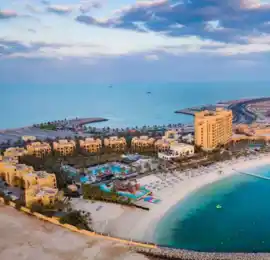
Ajman City lies on the Arabian Gulf coast in the northern part of the United Arab Emirates.
Its main coastal territory sits between Sharjah and Umm Al Quwain. Because the urban areas of Ajman and Sharjah are closely connected, the transition between them can feel much less obvious than travelling between more distant UAE cities.
However, Ajman's borders are not limited to this coastal area.
Two detached parts of the emirate, Masfout and Al Manama, lie inland. This gives Ajman a geographical range extending from the Arabian Gulf towards the Hajar Mountain region.
The result is a small emirate with landscapes that change significantly depending on where you travel.
Ajman can be understood through its three main geographical areas.
Ajman City is the coastal capital and main urban centre of the emirate.
It contains most of Ajman's population and much of its commercial, residential and government activity. The city also provides the most visible connection to Ajman's maritime history.
The coastline, creek and traditional dhow-building activity reflect the importance that the sea once had to local livelihoods.
Today, modern residential districts, hotels, businesses and waterfront developments sit alongside older parts of the city.
Masfout reveals a completely different side of Ajman.
It is a landlocked enclave in the south of the UAE near the Hajar Mountains, around a 90-minute drive from Ajman City. Its higher elevation and rocky surroundings give it a noticeably different landscape from the coastal capital. Official tourism information describes Masfout as an area of fertile agricultural land, mountain scenery and outdoor terrain.
Instead of beaches and dense urban development, visitors encounter mountains, wadis and rugged countryside.
The area also contains historic landmarks such as Masfout Castle and Masfout Gate.
Masfout demonstrates particularly well why Ajman should not be thought of as simply a coastal city.
Al Manama is another detached part of the Emirate of Ajman.
It lies in the plains near the foothills of the Hajar Mountains, east of the main coastal territory.
Its environment is quieter and more rural than Ajman City, with agriculture forming a visible part of the surrounding landscape. Official Ajman Tourism describes Al Manama as approximately an hour's drive from Ajman City.
Historic buildings and local heritage provide another connection with the emirate's past.
Together, Ajman City, Masfout and Al Manama give the emirate three noticeably different geographical identities.
Human activity in the Ajman region stretches back thousands of years.
Archaeological discoveries indicate settlement dating to around 3000 BC. Finds from an ancient burial site at Muwaihat include pottery and other material evidence of early communities in the area.
The history of modern Ajman is much more recent.
Official Ajman Tourism traces the foundation of the modern emirate to the early nineteenth century, when the Al Nuaim established a permanent coastal settlement. Fishing and pearling became important livelihoods, as they did across much of the Gulf.
Boat building also became particularly significant.
Ajman developed into an important centre for constructing traditional wooden dhows, using skills passed through generations of craftsmen.
During the nineteenth century, Ajman became part of the political arrangements between the Gulf sheikhdoms and Britain that eventually led to the region being known as the Trucial States.
A much larger political transformation came in the twentieth century.
On 2 December 1971, Ajman joined Abu Dhabi, Dubai, Sharjah, Umm Al Quwain and Fujairah in forming the United Arab Emirates. Ras Al Khaimah joined the federation in 1972.
Ajman is one of the UAE's seven constituent emirates.
It has its own ruler and local government while participating in the UAE's federal political system.
Despite being the country's smallest emirate by area, Ajman has developed rapidly alongside the wider UAE.
Modern infrastructure, residential development, industry, trade and tourism have changed the emirate considerably, particularly around Ajman City.
Yet its smaller scale and geographically separated inland areas mean Ajman retains characteristics that distinguish it from neighbouring Dubai and Sharjah.
Ajman's economy has changed considerably from the days when coastal life depended heavily on fishing, pearling and dhow building. These traditional industries remain important to understanding the emirate's maritime history.
Today, Ajman has a diversified economy supported by manufacturing, wholesale and retail trade, construction and other service and commercial activities. Ajman Port and Ajman Free Zone also contribute to the emirate's role in trade and business.
According to the UAE Government, Ajman's GDP at current prices exceeded AED 36 billion in 2023, with manufacturing among its largest contributing sectors.
This economic development has taken place alongside continued efforts to preserve the emirate's maritime and cultural heritage.
Ajman's cultural identity remains closely connected with the sea, traditional Emirati life and the communities that developed across its coastal and inland territories.
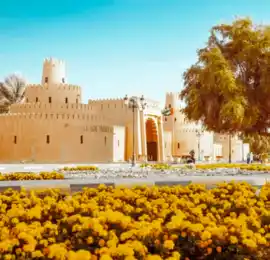
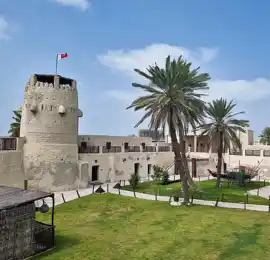
In Ajman City, forts, museums, souqs and dhow-building traditions provide reminders of life before rapid urbanisation.
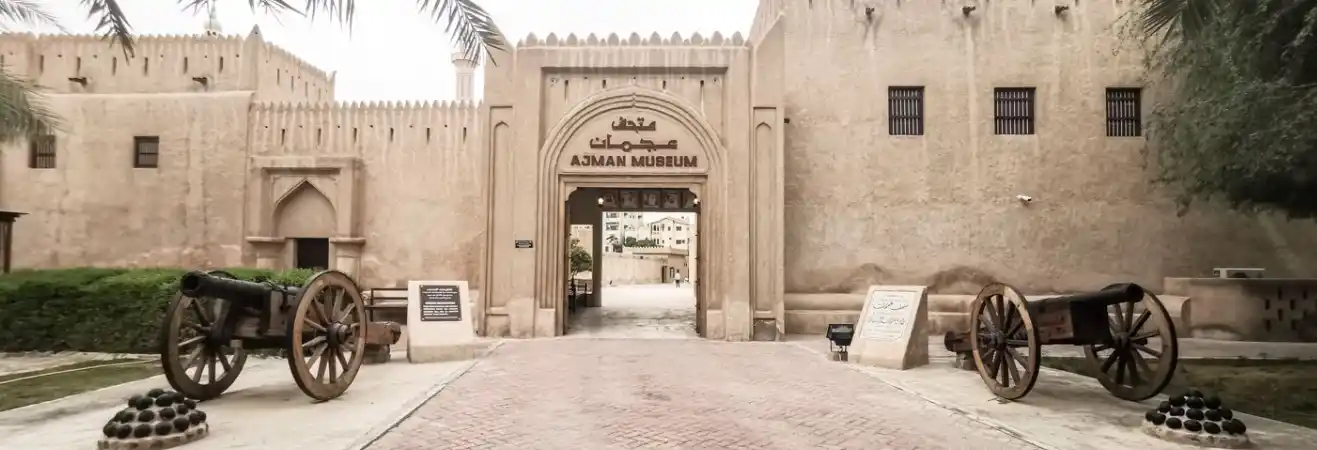
Ajman Museum is housed in the historic Ajman Fort and preserves archaeological material, manuscripts, traditional objects and evidence of earlier ways of life. The UAE Government identifies the fort as one of the country's historic landmarks.
Heritage is not limited to the capital.
Masfout and Al Manama contain their own forts, museums and historic sites, helping preserve the stories of inland communities as well as those of the coast.
This geographical spread gives Ajman's heritage more variety than visitors may initially expect from the UAE's smallest emirate.
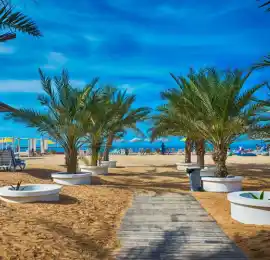
The Arabian Gulf has shaped Ajman's history and continues to influence the character of its main city.
Beaches stretch along the coastal area, while the creek provides a more direct connection with the emirate's maritime past.
The coastline is not Ajman's only important natural environment.
Mangrove areas support coastal ecosystems and create a landscape very different from the open desert associated with much of the UAE.
The combination of beaches, coastal waters and mangroves adds another dimension to Ajman's natural geography.
Travel away from the developed coastal areas and the landscape gradually becomes more open and arid.
Desert terrain forms part of the wider natural environment around Ajman and along routes towards the emirate's inland enclaves.
Official Ajman Tourism itself describes the emirate's landscape as including white-sand beaches, rolling desert dunes, mountain scenery and mangrove forests.
The desert is therefore part of Ajman's broader geographical identity, not simply a setting for tourism activities.
Organised desert experiences may include dune driving, camel riding, sandboarding or sunset stops depending on the location and tour.
Detailed safari packages, however, belong on dedicated desert safari pages rather than this general guide to the Emirate of Ajman.
The Hajar Mountain region creates the greatest visual contrast with coastal Ajman.
Masfout sits among rugged mountain terrain where rocky slopes, wadis and open countryside replace the flat urban landscape of Ajman City.
Its higher elevation can also produce somewhat cooler conditions than the coast, particularly at certain times of year.
Al Manama provides another transition between desert plains and the mountain foothills.
These inland territories are important because they reveal how geographically fragmented and varied Ajman actually is.
A visitor who sees only Ajman City experiences just one part of the emirate.
Ajman has a desert climate, with hot summers and milder winters.
Conditions near the Arabian Gulf can be humid, particularly during warmer months.
The inland areas can feel different.
Masfout's elevation and mountain environment can produce more comfortable conditions than the coastal city at certain times, although summers throughout the UAE remain hot.
For outdoor exploration, the cooler part of the year generally provides more comfortable conditions, particularly for walking, desert activities and mountain areas.
During hotter months, outdoor activities are usually easier early in the morning or later in the day.
Ajman is part of a modern and highly international country, but Emirati and Islamic traditions remain important to everyday life.
Arabic is the UAE's official language, while English is widely used in tourism, hospitality, shopping and business.
Visitors should dress respectfully in traditional neighbourhoods, government buildings, mosques and cultural sites.
During Ramadan, daily routines and opening hours can change, and visitors should remain aware of local customs.
Traditional Emirati hospitality also remains visible. Coffee, dates and generous treatment of guests have long formed part of social culture across the Emirates.
Moving around Ajman City is relatively straightforward by taxi, private car or local transport.
Travelling across the entire emirate, however, requires more planning.
Masfout is roughly a 90-minute drive from Ajman City, while Al Manama is around an hour away according to Ajman's official tourism information.
That distance matters when planning a visit.
Ajman City, Masfout and Al Manama should not be treated as nearby neighbourhoods that can casually be combined within a short outing.
Visitors interested in the mountains or inland heritage should allow enough time for the journey.
The best way to explore Ajman depends on which side of the emirate interests you.
Ajman City makes sense for travellers interested in the coast, urban heritage and the emirate's maritime history.
Masfout offers a very different experience focused on mountains, wadis, historic landmarks and outdoor landscapes.
Al Manama provides a quieter view of inland Ajman, including agricultural landscapes and local heritage.
Trying to cover all three areas quickly can result in spending much of the day on the road.
For most visitors, choosing a single geographic area and exploring it thoroughly will provide a better understanding of the emirate.
Ajman's small size can be misleading.
On the Arabian Gulf coast, Ajman City reflects the emirate's history of fishing, pearling, dhow building and maritime trade while continuing to develop as a modern urban centre.
Travel inland and the character changes.
Al Manama introduces quieter plains, agriculture and foothill landscapes. Farther south, Masfout reaches into the Hajar Mountains, where rocky terrain and wadis replace the coastal scenery.
Together, these areas make Ajman more geographically varied than its reputation as the UAE's smallest emirate might suggest.
For visitors interested in seeing beyond the UAE's largest cities, Ajman offers a compact but distinctive combination of coast, desert, heritage and mountains.